Fixed Asset Management Programs: What They Are, Eligibility, How to Implement, and Where to Get Support
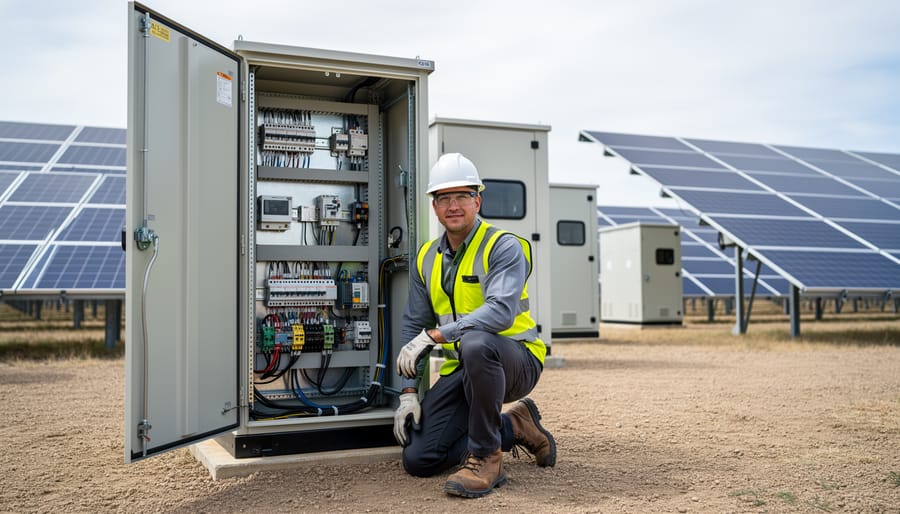
A fixed asset management program is a systematic approach to tracking, valuing, and maintaining physical assets throughout their lifecycle, and for solar organizations, it’s essential for managing everything from photovoltaic panels and inverters to mounting systems and battery storage arrays across multiple project sites. These programs combine software platforms, standardized procedures, and compliance frameworks to ensure accurate depreciation calculations, streamlined regulatory reporting, and optimized maintenance schedules that protect asset value and revenue generation capacity.
The stakes are particularly high in solar development. A typical utility-scale installation comprises thousands of individual components with varying depreciation schedules, warranty terms, and performance guarantees. Without proper tracking, organizations risk missing critical tax deductions under Modified Accelerated Cost Recovery System rules, failing to capture warranty claims before expiration, or overlooking maintenance intervals that could prevent costly equipment failures. As solar panel technology 2026 advances bring higher efficiency modules with complex bifacial designs and integrated microinverters, the asset tracking challenge intensifies.
Most solar contractors recognize they need better asset management when they struggle to produce documentation for audits, can’t quickly determine which project sites contain specific equipment models subject to recall, or discover discrepancies between their tax filings and actual installed capacity. This guide provides the framework to evaluate whether your organization needs a formal program, outlines implementation steps tailored to solar operations, and identifies the compliance obligations that affect both small residential installers and large-scale developers managing gigawatts of capacity.
What Fixed Asset Management Programs Are
Core Components and Features
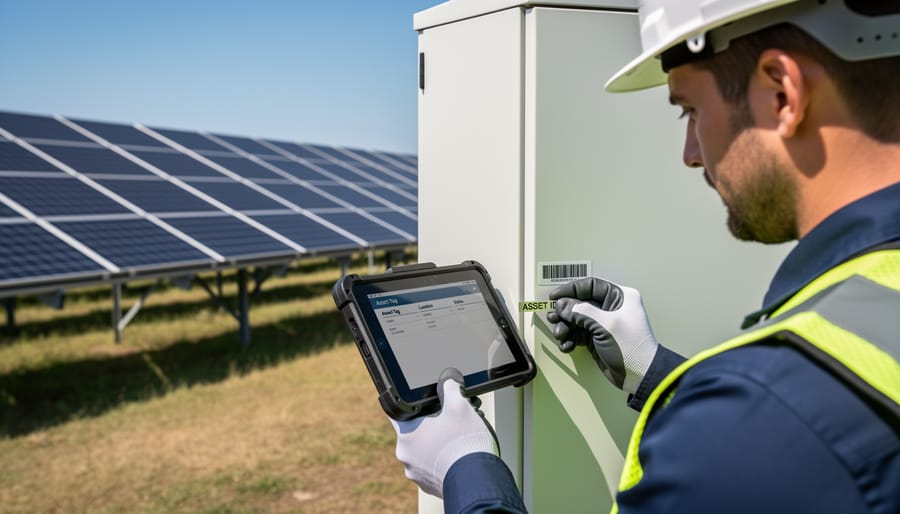
A robust fixed asset management program for solar companies centers on several interconnected modules that work together to maintain accurate financial records and operational oversight. The asset registry serves as the foundation, creating a comprehensive database where each piece of equipment, from inverters and panels to racking systems and monitoring devices, receives a unique identifier, purchase details, location assignment, and current status. This centralized repository eliminates the scattered spreadsheets and fragmented records that plague growing solar operations.
Depreciation calculators automate the complex task of applying MACRS schedules, straight-line methods, or bonus depreciation rules specific to solar equipment. These modules calculate monthly depreciation expense, generate required tax schedules, and maintain historical records for each asset throughout its useful life. For solar installations claiming ITC benefits, the software tracks basis adjustments and recapture requirements without manual intervention.
Most programs include these essential capabilities:
- Asset tagging and identification systems that link physical equipment to digital records
- Automated depreciation schedules configured for solar-specific tax treatment and useful life parameters
- Maintenance tracking modules that log service events, warranties, and performance metrics
- Audit trail capabilities recording all asset transactions, transfers, and status changes
- Reporting dashboards providing real-time visibility into asset values, depreciation status, and portfolio composition
Integration with existing accounting systems represents another critical component. Leading platforms connect directly to QuickBooks, NetSuite, or other ERP software, pushing depreciation journal entries and pulling purchase order data automatically. This eliminates duplicate data entry and ensures your fixed asset records reconcile seamlessly with general ledger balances, a requirement for clean audits and lender reporting.
Distinction from General Asset Management
Fixed asset management programs serve a distinct accounting and compliance function that differs fundamentally from the operational focus of general asset management programs. While broader asset management encompasses performance monitoring, O&M scheduling, energy production analytics, and portfolio optimization across solar installations, fixed asset management specifically tracks the financial accounting lifecycle of capitalized equipment, recording acquisition costs, calculating depreciation, maintaining tax basis records, and ensuring GAAP compliance for balance sheet reporting.
Solar companies need both systems because they address different business requirements. General asset management platforms optimize the physical and operational performance of solar arrays, tracking inverter uptime, module degradation, and maintenance interventions. Fixed asset management programs, by contrast, maintain the financial records required for tax filings, audited financial statements, and investor reporting, capturing asset capitalization dates, depreciation schedules, and disposal transactions that determine taxable income and book value.
The distinction becomes critical when evaluating asset management alternatives for your organization. Integrated ERP systems may combine both functions, but many solar developers maintain separate specialized platforms, using operational asset management software for field performance and a dedicated fixed asset module for accounting purposes. This dual approach ensures neither financial compliance nor operational efficiency gets shortchanged as solar portfolios scale and regulatory scrutiny intensifies.
Eligibility and Requirements for Solar Companies
Regulatory and Financial Accounting Triggers
Solar companies face multiple regulatory triggers that require formal fixed asset tracking systems. Understanding these requirements helps determine when to move from informal spreadsheets to a structured fixed asset management program.
GAAP Capitalization Requirements
Generally Accepted Accounting Principles require businesses to capitalize and track assets exceeding specific cost thresholds. Most solar companies must capitalize individual assets costing $2,500 or more, though many set lower thresholds ($1,000 or $500) for tighter financial control. Once capitalized, these assets appear on balance sheets and require systematic depreciation tracking rather than immediate expense recognition. Solar installations, inverters, battery storage systems, and commercial-scale racking all typically exceed capitalization thresholds.
IRS Depreciation Rules
The Internal Revenue Service mandates detailed fixed asset records for tax reporting and depreciation calculations. Solar equipment generally qualifies for Modified Accelerated Cost Recovery System depreciation over five years, with bonus depreciation often available. Companies claiming the Investment Tax Credit must maintain comprehensive asset documentation including acquisition dates, placed-in-service dates, original costs, and depreciation schedules. IRS audits scrutinize these records, making accurate tracking essential for defending tax positions.
State-Level Property Tax Reporting
Many states require annual property tax filings listing business personal property, including solar equipment and vehicles. These reports demand accurate asset inventories with acquisition dates, costs, and depreciation calculations. States apply varying assessment methods and exemption thresholds, but consistent fixed asset tracking across all jurisdictions simplifies multi-state compliance and reduces assessment disputes.
Operational Readiness Criteria
Before implementing a fixed asset management program, solar companies must establish three foundational capabilities: complete and accurate asset inventories, adequate accounting team capacity, and reliable data infrastructure. Without these prerequisites, even the most sophisticated software will struggle to deliver clean depreciation schedules or compliance-ready reports.
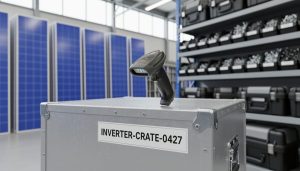
Start with your asset inventory. You need a verified list of every capitalized asset your company owns, solar panels, inverters, racking systems, monitoring equipment, vehicles, and installation tools above your capitalization threshold. This inventory should include purchase dates, original costs, locations, and current conditions. Companies managing distributed solar portfolios must track assets across multiple sites, often requiring barcode scanning for tracking physical equipment in the field. If your current records are incomplete or spread across spreadsheets, project files, and invoice folders, plan to dedicate resources to this baseline audit before software deployment.
Note: Conducting a thorough pre-implementation asset audit is essential, clean baseline data determines whether your program produces accurate depreciation and compliant reports from day one.
Accounting staff capacity is equally critical. Implementing and maintaining a fixed asset program requires dedicated time from someone who understands both GAAP capitalization rules and solar equipment lifecycles. Small installers may assign this to a part-time bookkeeper working with their CPA, while larger developers typically need a full-time accountant managing the asset register, processing additions and retirements, and reconciling monthly. Assess whether your current team has bandwidth or if you need to hire, train, or outsource this function.
Finally, evaluate your data infrastructure. The fixed asset program must integrate with your accounting system to post depreciation entries and maintain general ledger consistency. You need reliable internet connectivity for cloud-based platforms, secure data storage that meets audit requirements, and backup protocols to prevent loss of critical asset records. Companies lacking these basics should address infrastructure gaps before adding new software layers.
How to Implement a Fixed Asset Management Program

Step 1: Conduct Asset Inventory and Needs Assessment
The first step requires a complete census of your fixed assets across all projects and facilities. Start by compiling a master spreadsheet listing every piece of equipment meeting your capitalization threshold, typically $2,500 for solar companies, though your policy may differ. For each asset, record the description, serial number, purchase date, cost, current location, and assigned project.
Pull data from multiple sources: accounts payable records, purchase orders, existing equipment logs, and field inventories. Send operations teams to job sites with standardized forms to capture serial numbers and condition notes for installed equipment. This physical verification catches assets missing from your books and identifies disposed items still carried as active.
Next, map your tracking gaps. Which asset classes lack adequate documentation? Where do acquisition-to-booking delays occur? Do you know which inverters are under warranty or which racking systems need replacement soon? Document these deficiencies clearly.
Finally, define your program requirements based on what you found. A 50-person EPC firm with 200 projects needs different capabilities than a ten-person installer with twenty systems. Consider asset volume, geographic dispersion, reporting frequency, audit requirements, and integration needs with your existing accounting software. This assessment shapes every subsequent implementation decision.
Step 2: Select Software or Platform
Selecting the right software requires evaluating both technical capabilities and alignment with solar operations. Start by confirming the platform handles MACRS depreciation schedules and multi-year solar equipment life cycles, standard depreciation calculators often lack these settings. Review integration options with your existing accounting system (QuickBooks, NetSuite, or similar) to avoid double-entry workflows and reconciliation errors.
Solar-specific features matter: look for modules that accommodate distributed assets across multiple sites, handle equipment transfers between projects, and track warranty periods tied to individual panels or inverters. If your operations include mobile field teams, prioritize asset software with barcode scanning capabilities for efficient physical audits and commissioning workflows.
Evaluate vendor support carefully. Request references from solar companies of similar size, ask about implementation timelines (typically 30 to 90 days for mid-sized firms), and confirm the vendor provides training for both accounting staff and field personnel. Cloud-based platforms generally offer faster deployment and lower upfront costs compared to on-premise solutions, but verify data security standards meet your lender and investor requirements.
Step 3: Configure Depreciation Rules and Asset Categories
Depreciation configuration forms the technical foundation of your fixed asset management program. Start by creating asset classes that align with IRS property classifications and your operational structure, typically separate categories for solar panels, inverters, mounting systems, battery storage, monitoring equipment, vehicles, and buildings or improvements.
For each class, assign the appropriate depreciation method. Most solar equipment qualifies for Modified Accelerated Cost Recovery System (MACRS) depreciation under the five-year property class, which accelerates deductions in early years and maximizes tax benefits. Alternative options include straight-line depreciation, which spreads deductions evenly across the asset’s useful life, or bonus depreciation rules that allow immediate expensing of qualifying assets placed in service during eligible periods.
Establish useful life parameters for each category based on IRS guidelines, manufacturer specifications, and your operational experience. Solar panels typically use 25-30 year useful lives for financial statement purposes despite the five-year MACRS schedule for tax reporting. This dual-basis approach, aggressive tax depreciation paired with realistic book depreciation, requires your program to maintain separate schedules.
Configure half-year and mid-quarter conventions correctly, as these IRS timing rules affect first-year depreciation calculations based on when assets enter service during your fiscal year.
Step 4: Import Existing Assets and Establish Baseline
Data migration begins by exporting asset records from your current system, typically spreadsheets, accounting software, or ERP modules, into a standardized import template provided by your new fixed asset management platform. Map each field carefully: asset description, acquisition date, original cost, accumulated depreciation, location code, and asset class. Most platforms require CSV or Excel formats with strict column headers.
Before importing, clean your data. Remove duplicate entries, correct inconsistent naming conventions, and verify cost figures against purchase orders or invoices. A single transposed digit can create reconciliation headaches later.
Run a test import with a subset of assets first, perhaps 50-100 records representing various asset types. Review the results for errors in depreciation calculations, asset categorization, or missing required fields. Once the test batch reconciles correctly, proceed with the full import.
After importing all assets, perform initial reconciliation by comparing the system’s total net book value against your general ledger’s fixed asset accounts. Investigate any variances immediately; common culprits include omitted assets, incorrect depreciation methods, or acquisition dates that don’t match accounting records. This baseline reconciliation establishes the foundation for all future reporting and ensures your fixed asset register accurately reflects your financial statements from day one.
Step 5: Train Staff and Establish Workflows
Training requirements vary by role: accounting staff need comprehensive instruction on depreciation entries, disposal procedures, and reconciliation protocols, typically requiring 8-12 hours of initial training plus ongoing reference support. Operations personnel focus on physical asset tagging, location updates, and maintenance logging, usually 4-6 hours of hands-on training. Field technicians need basic familiarity with mobile data entry for installations and service calls, achievable in 2-3 hours.
Establish clear workflows for three critical processes. Asset acquisition workflows define who enters new purchases, assigns asset numbers, applies physical tags, and records initial costs and locations. Transfer workflows specify authorization requirements, documentation standards, and system update procedures when equipment moves between sites or legal entities. Disposal workflows outline approval chains, final meter readings, tax documentation requirements, and system retirement steps. Document each workflow with checklists, assign specific role responsibilities, and build approval hierarchies into your software configuration to prevent unauthorized changes that could compromise tax compliance or financial reporting accuracy.
Step 6: Launch and Monitor
After completing configuration and training, execute a controlled launch by processing one month of transactions in parallel with your existing system. Run daily reconciliation reports comparing fixed asset balances, depreciation calculations, and journal entries between the new program and your legacy records. Any discrepancies exceeding $500 or 2% of asset value require immediate investigation and resolution before full cutover.
Establish monthly audit protocols within the first quarter. Review asset acquisition entries for proper capitalization versus expense treatment, verify depreciation calculations against IRS tables for solar equipment classes, and confirm disposal entries include complete documentation. Schedule quarterly physical asset counts for high-value items like inverters and battery systems, reconciling serial numbers and locations against system records.
Monitor three key performance indicators ongoing: data entry error rates (target below 1%), month-end close timing (should not exceed pre-implementation duration by more than one day), and audit finding counts (zero material findings). Track user adoption through transaction volume metrics and help desk tickets, addressing training gaps promptly to maintain accuracy.

Rights, Obligations, and Compliance Considerations
Tax Reporting and IRS Compliance
The IRS imposes strict requirements on solar companies claiming depreciation and tax incentives for fixed assets. Your fixed asset management program must generate accurate Form 4562 depreciation reporting which solar businesses file annually to document depreciation deductions under Modified Accelerated Cost Recovery System (MACRS) schedules. For solar installations, this typically means tracking five-year property classifications for most equipment, though some components may qualify for different recovery periods.
Documentation requirements extend beyond simple depreciation calculations. You must maintain comprehensive records showing the placed-in-service date for each asset, original cost basis, any adjustments for tax credits claimed, and the depreciation method applied. Solar assets claiming the Investment Tax Credit require particularly meticulous tracking, as the ITC reduces your depreciable basis, typically by half the credit amount under current rules.
Warning: The IRS requires you to retain all fixed asset documentation, including acquisition invoices, placed-in-service certifications, and depreciation schedules, for at least seven years after the asset’s final tax year to support ITC and bonus depreciation claims.
Bonus depreciation eligibility adds another compliance layer. When solar equipment qualifies for 100% first-year bonus depreciation (as certain property did in recent years), your program must correctly calculate the reduced basis before applying regular MACRS depreciation to any remaining value. Recapture provisions also apply if you dispose of solar assets before their full recovery period, your system needs to track holding periods and calculate recapture amounts when equipment is sold, scrapped, or transferred. Many solar companies discover these compliance gaps only during audits, making accurate fixed asset tracking essential from day one.
Financial Statement and Audit Requirements
Solar companies operating under GAAP must capitalize equipment, installation costs, and related expenditures exceeding the organization’s capitalization threshold, typically $2,500 to $5,000 per asset. Fixed asset management programs automate capitalization tracking, recording assets at historical cost plus installation, freight, and modification expenses necessary to place them in service. Systems generate depreciation schedules matching the asset’s useful life, producing accurate expense recognition on monthly and annual financial statements.
Annual audits require reconciliation between fixed asset registers and general ledger balances. Auditors verify existence through physical inspections or photographic documentation, confirm valuation accuracy, and validate depreciation calculations. A properly maintained fixed asset program provides audit trails showing acquisition dates, costs, transfers, disposals, and accumulated depreciation, substantially reducing audit fees and preparation time.
Lenders and tax equity investors require periodic asset certifications detailing current values, depreciation status, and confirmation that pledged collateral remains in place and operational. Fixed asset programs generate these reports automatically, tracking liens, ownership transfers, and equipment locations across multiple project sites. They also support footnote disclosures in financial statements, detailing asset composition, useful lives, and depreciation methods, critical information for stakeholders evaluating a solar company’s capital structure and operational efficiency.
Asset Disposal and Transfer Documentation
When solar companies retire, sell, or transfer equipment, they must document each transaction to maintain tax compliance and financial accuracy. Start by recording the disposal date, method (sale, scrap, donation, or trade-in), and proceeds received if applicable. Calculate and record any gain or loss on disposal by comparing the asset’s net book value to the sale price or salvage value.
For equipment claiming Investment Tax Credits or accelerated depreciation, maintain detailed records showing the asset met minimum use requirements, typically five years under ITC rules. Early disposal may trigger recapture obligations, requiring amended tax filings and repayment of a portion of claimed credits. Document the specific reason for early retirement and consult with a CPA familiar with solar tax incentives before finalizing the transaction.
Transfer documentation for relocated equipment must include updated location records, condition assessments, and any reassignment of project codes or cost centers. When selling solar assets to third parties, execute written transfer agreements that clearly establish ownership change dates and specify which party holds responsibility for future tax obligations. Retain all disposal and transfer records for at least seven years to satisfy IRS audit requirements and support financial statement accuracy.
Where to Get Help and Support Resources
Software Vendors and Implementation Partners
Solar companies evaluating fixed asset management solutions typically choose between enterprise resource planning (ERP) systems with integrated asset modules and dedicated standalone platforms. ERP-integrated options, offered by vendors such as NetSuite, Microsoft Dynamics, and Sage Intacct, combine fixed asset tracking with accounting, project management, and inventory functions in a unified environment. These solutions suit mid-to-large solar developers managing complex operations across multiple projects and asset types. Standalone fixed asset management platforms like Assetworks, AssetPanda, and EZOfficeInventory provide focused functionality without the cost and implementation complexity of full ERP systems, making them practical for installers and contractors with straightforward tracking needs.
Determining which path fits your organization depends on current system infrastructure, asset portfolio complexity, and growth trajectory. Implementation partners, including accounting firms with solar industry experience and specialized consultants, assist with software selection, configuration, data migration, and staff training. Many vendors offer solar-specific customization services to accommodate MACRS depreciation schedules, ITC tracking, and multi-site equipment management. Request demonstrations focused on depreciation automation, integration capabilities with existing accounting systems, and reporting tools that meet tax and audit requirements before committing to a platform.
Professional Services and Industry Associations
CPAs specializing in renewable energy taxation can help solar companies set up depreciation schedules, ITC documentation, and annual reporting workflows tailored to the industry’s unique incentive structures. Look for accountants experienced with MACRS recovery periods, bonus depreciation rules, and state-level solar credits to avoid costly compliance missteps.
Solar-focused financial consultants offer implementation support for fixed asset programs, from software selection to process design and staff training. These advisors understand the operational realities facing solar installers in Maryland and nationwide, bridging the gap between accounting requirements and field operations.
The Solar Energy Industries Association (SEIA) provides members with asset management resources, including webinars on financial controls, template policies, and connections to vetted service providers. Their educational programming covers evolving tax treatment and regulatory requirements specific to solar assets.
Regional solar trade associations often host workshops on financial management topics and maintain directories of qualified professionals familiar with local compliance environments, making them valuable starting points for companies building asset tracking capabilities.
How to Apply or Complete the Process
Implementing a fixed asset management program is not an external application process requiring approval from a regulatory body. Solar companies complete this internally by following the implementation steps outlined earlier: conducting an asset inventory, selecting appropriate software, configuring depreciation rules, importing existing assets, training staff, and launching the system.
The administrative process centers on establishing internal controls and documentation standards. Start by designating a program owner, typically someone in finance or accounting, who will oversee configuration decisions and serve as the primary point of contact with software vendors. This person coordinates with IT to ensure data integration with existing accounting systems and establishes approval workflows for asset additions, transfers, and disposals.
Next, create written policies documenting your capitalization thresholds, depreciation methods for each asset class, and procedures for recording new acquisitions. These policies should reference IRS guidelines and GAAP requirements specific to solar equipment, ensuring consistency across your organization.
Finally, schedule an initial reconciliation between your new fixed asset register and general ledger to confirm accuracy before the first reporting period. This verification step prevents discrepancies that could complicate tax filings or audits later.
Common Questions About Fixed Asset Management Programs
Solar companies evaluating or implementing fixed asset management programs consistently raise similar concerns. Understanding the practical realities of costs, integration, compliance, and scalability helps organizations plan effectively and avoid common pitfalls.
What’s the typical cost of implementing a fixed asset management program?
Implementation costs range from $2,000 to $15,000 for small to mid-sized solar contractors using cloud-based platforms, while enterprise solutions for large developers can exceed $50,000 with customization and integration. Ongoing subscription fees typically run $50 to $500 monthly depending on asset count and feature requirements.
How does the program integrate with existing accounting software?
Most modern fixed asset platforms offer direct integrations with QuickBooks, Xero, NetSuite, and Sage through APIs that synchronize depreciation entries, asset values, and disposal transactions automatically. Companies using legacy accounting systems may require custom middleware or manual export-import procedures to maintain synchronization.
What depreciation methods apply to solar equipment?
Solar assets typically use Modified Accelerated Cost Recovery System (MACRS) for federal tax purposes, with most solar equipment qualifying for five-year property classification under IRS guidelines. Financial reporting often employs straight-line depreciation over the asset’s estimated useful life, which may differ from tax depreciation schedules.
When should a growing company upgrade their fixed asset management program?
Companies should evaluate upgrades when tracking more than 500 assets, expanding into multiple states with varying tax requirements, managing complex asset transfers between entities, or facing audit findings related to asset documentation. Investor due diligence requirements and lender covenant reporting also commonly trigger the need for more robust platforms.
Beyond these foundational concerns, solar businesses often struggle with the frequency and scope of physical asset audits. Industry practice suggests conducting comprehensive physical inventories annually for installed solar arrays and quarterly spot-checks for portable equipment, inverters, and battery systems. Companies holding assets across multiple sites or with high equipment turnover may need more frequent verification cycles to maintain accuracy.
Integration challenges extend beyond accounting software. Field service management systems, project management platforms, and procurement tools all generate asset-related data that should flow into the fixed asset program. Establishing clear data ownership, defining automated triggers for asset capitalization, and creating approval workflows for asset disposals require cross-departmental coordination that many solar companies underestimate during initial implementation planning. The upfront investment in process mapping and stakeholder alignment prevents recurring data reconciliation headaches and ensures the program delivers reliable financial visibility as the organization scales.
A well-implemented fixed asset management program delivers measurable returns for solar companies navigating the industry’s evolving financial and regulatory landscape in 2026. Beyond meeting IRS and GAAP requirements, these programs provide the visibility needed to optimize capital allocation, strengthen investor confidence, and support data-driven equipment replacement decisions across growing portfolios.
The implementation pathway outlined, from conducting a thorough asset inventory through selecting appropriate software, configuring depreciation rules, and training staff, creates a foundation for accurate financial reporting and operational efficiency. Solar companies that complete this process gain immediate benefits: streamlined audit preparation, reduced risk of compliance penalties, and reliable depreciation schedules that maximize tax advantages from solar-specific incentives.
For solar developers managing multi-site installations, fixed asset programs transform scattered equipment records into centralized intelligence that supports maintenance planning and lifecycle analysis. Contractors scaling their operations find these systems essential for demonstrating financial controls to lenders and partners. Even smaller installers benefit from the clarity these programs bring to equipment investments and tax planning.
The compliance and financial visibility advantages extend beyond current operations. As solar portfolios mature and ownership structures evolve through acquisitions or refinancing, comprehensive fixed asset records become strategic assets themselves, enabling faster due diligence, accurate valuations, and smoother transitions. Solar companies investing in robust fixed asset management today position themselves for sustainable growth and competitive advantage in an increasingly sophisticated market.