Asset Management Alternatives for Solar Programs: Which Path Fits Your Operations?
For solar professionals managing distributed fleets in 2026, the choice between in-house asset management, third-party platforms, and hybrid models comes down to scale, control requirements, and technical complexity. After evaluating these approaches across operational solar installations, we found that mid-sized operators with 50-500 MW in portfolio capacity typically benefit most from hybrid solutions that pair proprietary monitoring with specialized third-party logistics, while smaller installers under 50 MW see better returns from pure third-party platforms and enterprise developers above 500 MW justify full in-house systems.
The decision isn’t simply about software features or upfront cost. Asset management in solar operations encompasses real-time performance monitoring, preventive maintenance scheduling, warranty tracking, inverter diagnostics, module-level analytics, and integration with evolving solar panel tech that demands constant firmware updates and compatibility management. Each alternative shifts where responsibility sits for data infrastructure, field service coordination, and regulatory compliance reporting.
The operational realities matter more than feature lists. In-house systems offer maximum data ownership and customization but require dedicated IT staff and ongoing development resources. Third-party platforms deliver faster deployment and lower fixed costs but introduce vendor dependency and data-sharing constraints. Hybrid approaches attempt to balance these tradeoffs, though they add integration complexity.
This comparison examines what each asset management alternative actually entails, how they differ across cost structure, technical control, scalability, and compliance burden, and which operational profiles align with each model. We’ve structured the analysis to support both quick reference decisions and detailed dimensional evaluation, grounding recommendations in the specific demands of solar fleet management rather than generic software selection criteria.
Asset Management Alternatives at a Glance
Before evaluating vendors or committing to a deployment timeline, solar operators need a clear view of how asset management alternatives differ in their fundamental approach and suitability. The four main paths diverge sharply in design philosophy, target scale, and operational fit.
Integrated enterprise asset management platforms bring institutional-grade infrastructure tools to solar fleets. These systems, SAP EAM, IBM Maximo, Infor EAM, originated in utilities, manufacturing, and heavy industry. They offer deep financial integration, rigorous compliance tracking, and multi-asset-class management. For solar operators, that breadth comes with complexity: implementations typically span six to twelve months and require dedicated IT resources. The systems excel at consolidating assets across diverse portfolios but often treat solar installations as generic field equipment rather than performance-driven generation assets.
Specialized solar O&M software takes the opposite approach. Platforms like AlsoEnergy, PowerFactors, and Scoop Solar were built specifically for photovoltaic operations. They understand inverter strings, module degradation curves, and performance ratios natively. These tools integrate directly with monitoring systems and speak the language of solar contractors. Implementation typically completes in weeks rather than months, and the interfaces reflect solar workflows rather than adapted industrial processes. The trade-off appears in enterprise feature depth: financial consolidation and cross-departmental workflows often require additional integration work.
Hybrid CMMS solutions occupy the middle ground. Systems like UpKeep, Fiix, and Hippo CMMS offer configurable maintenance management that can accommodate solar-specific needs through customization and third-party integrations. We found these platforms particularly relevant for operators managing mixed asset portfolios, solar installations alongside storage, backup generators, or facility infrastructure. Configuration flexibility mirrors the 2026 innovations driving modular technology stacks across the industry.
In-house custom development represents the fourth path. Some large developers and asset owners build proprietary systems tailored to their specific operational models, competitive differentiators, or legacy infrastructure. These efforts demand substantial upfront investment and ongoing technical staff but deliver complete control over functionality and data architecture.
| Alternative Type | Typical Fleet Size | Core Strength | Implementation Complexity |
|---|---|---|---|
| Enterprise EAM Platforms | 500+ MW | Financial integration, multi-asset consolidation | High (6-12 months) |
| Specialized Solar O&M | 50-500 MW | Native solar workflows, monitoring integration | Low (2-6 weeks) |
| Hybrid CMMS Solutions | 20-200 MW | Flexibility, mixed-asset capability | Medium (1-3 months) |
| Custom In-House Systems | 200+ MW | Full control, proprietary optimization | Very High (12+ months) |
The snapshot reveals no universal winner. Enterprise platforms suit organizations prioritizing financial controls and broad asset consolidation. Specialized solar software serves operators focused on generation optimization and rapid deployment. Hybrid CMMS tools fit contractors balancing solar work with other maintenance operations. Custom development makes sense only when proprietary requirements or competitive differentiation justify the investment. The right choice hinges on matching system architecture to operational reality, not chasing comprehensiveness for its own sake.
Understanding Your Asset Management Options
Integrated Enterprise Asset Management Platforms
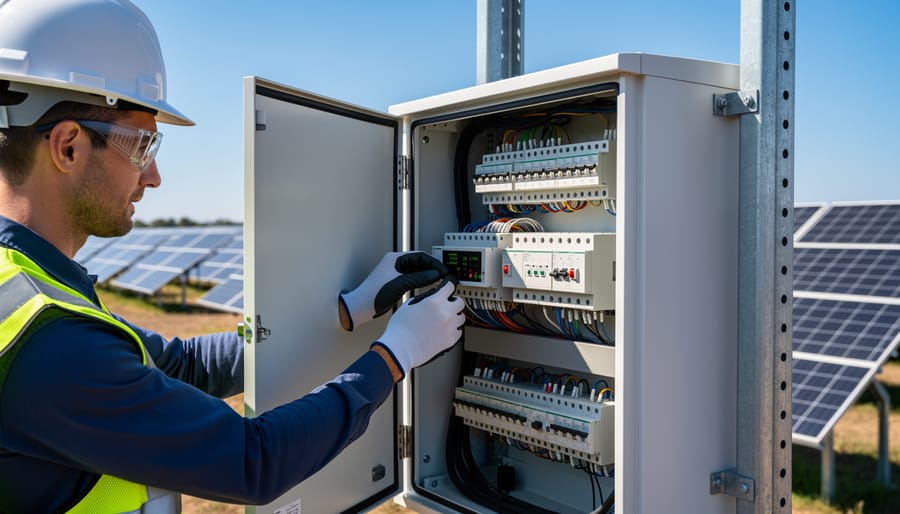
Enterprise asset management platforms emerged from industries managing large-scale infrastructure, utilities, manufacturing, transportation networks, where tracking thousands of assets across multiple locations was business-critical long before solar entered the picture. These systems, built by vendors like IBM Maximo, SAP EAM, and Infor EAM, were designed to handle complex maintenance workflows, regulatory compliance, and financial asset tracking for physical infrastructure portfolios worth billions.
When solar developers began operating utility-scale fleets in the 2010s, they adapted these enterprise platforms to renewable energy operations. The core architecture remained the same: centralized databases linking asset hierarchies, work orders, inventory, procurement, and financial modules. A typical solar implementation maps each site as a functional location, with inverters, trackers, and module strings as child assets inheriting maintenance schedules and warranty data.
We’ve observed that these platforms excel at standardizing processes across diverse asset types. If your organization manages solar alongside wind farms, storage facilities, or conventional generation, an enterprise system provides unified visibility and consistent workflows. They handle complex ownership structures, multi-entity financial reporting, and audit trails that satisfy utility-grade regulatory requirements.
The tradeoff is complexity. Enterprise platforms require dedicated administrators, often need customization to accommodate solar-specific metrics like performance ratios and irradiance correlation, and assume users can navigate hierarchical data structures. Implementation typically involves configuration workshops where solar operations teams translate their workflows into the platform’s process logic rather than the software adapting to existing practices.
Specialized Solar O&M Software
Specialized solar O&M software represents the middle ground between generic maintenance systems and enterprise-scale platforms. These tools emerged specifically to address the operational realities of photovoltaic asset management, inverter string monitoring, module-level performance tracking, and warranty claim coordination that general-purpose systems handle awkwardly if at all.
We’ve worked with several of these platforms across commercial and utility-scale portfolios. What distinguishes them is native understanding of solar-specific workflows. Instead of configuring a generic asset hierarchy to accommodate inverters and combiners, these systems model PV equipment relationships out of the box. Performance ratio calculations, degradation tracking, and irradiance-adjusted output comparisons function as core features rather than custom reports you build from scratch.
The typical architecture connects directly to site monitoring platforms, SolarEdge, SMA, Huawei systems, pulling production data and alarm states without manual exports or middleware. Work orders trigger automatically when string-level underperformance crosses your threshold, and technicians access equipment history, warranty status, and O&M manuals through mobile interfaces designed for field use rather than office desks.
These platforms usually price per megawatt under management, making them accessible for mid-sized developers managing 50-500 MW portfolios where enterprise systems feel like overkill but spreadsheets no longer scale. Implementation timelines run weeks rather than months, and vendor support teams speak solar operations fluently, they understand what IR inspection findings mean for dispatch priorities.
Hybrid CMMS Solutions
Hybrid CMMS platforms occupy the pragmatic middle ground between enterprise EAM complexity and solar-specific specialization. These computerized maintenance management systems, originally designed for industrial and facilities maintenance, adapt to solar operations through configurable workflows, custom fields, and API connections to monitoring platforms. Rather than native solar intelligence, they provide flexible frameworks that operators configure to track inverters, transformers, and array-level components alongside non-solar infrastructure.
We’ve observed hybrid approaches working well for organizations managing mixed asset portfolios: solar projects plus commercial buildings, industrial facilities, or other renewable installations. The same CMMS tracks HVAC maintenance schedules, fire system inspections, and PV inverter preventive maintenance under one operational umbrella. This consolidation appeals to diversified energy companies or property owners adding solar to existing real estate portfolios.
The integration architecture distinguishes capable hybrid systems from limited ones. Strong CMMS platforms expose robust APIs that pull performance data from SCADA systems, trigger work orders based on monitoring alerts, and push completion records back to project management tools. This connected approach compensates for the lack of built-in solar analytics, external monitoring platforms handle degradation trending and performance ratio calculations while the CMMS manages the resulting maintenance workflow.
Implementation flexibility cuts both ways. Configuration freedom lets you model solar-specific processes without vendor limitations, but it demands internal expertise to design workflows, build reports, and maintain integrations as monitoring platforms evolve.
In-House Custom Systems
In-house custom systems represent the build-over-buy path, where solar operators develop proprietary asset management solutions from scratch or commission external developers to create bespoke platforms. We’ve seen these systems emerge primarily at large developers with specialized tracking requirements that off-the-shelf solutions couldn’t address without extensive modification.
The custom approach starts with internal teams or contracted developers building a database architecture tailored to the organization’s exact fleet composition, work processes, and reporting hierarchy. Unlike commercial platforms that accommodate generic use cases, custom systems can enforce company-specific workflows, match existing approval chains, and integrate seamlessly with legacy infrastructure already in place. One developer we worked with built their system around a proprietary degradation model that tracked module performance against manufacturer curves specific to their procurement history, functionality that would’ve required expensive customization in commercial software.
The architecture typically combines open-source frameworks with purpose-built components. Development teams select database platforms, build APIs connecting to existing SCADA and monitoring infrastructure, and design interfaces matching operational staff’s actual information needs rather than adapting workflows to a vendor’s predetermined layout. This flexibility extends to reporting: custom systems generate exactly the executive dashboards, investor reports, and regulatory filings the organization requires without wrestling pre-built templates into compliance.
The trade-off centers on long-term ownership responsibility. Your team owns the codebase, which means maintaining it through technology shifts, staff turnover, and evolving operational requirements without vendor support lines or feature roadmaps.
Comparing Alternatives Across Key Dimensions
Functional Scope and Solar-Specific Capabilities
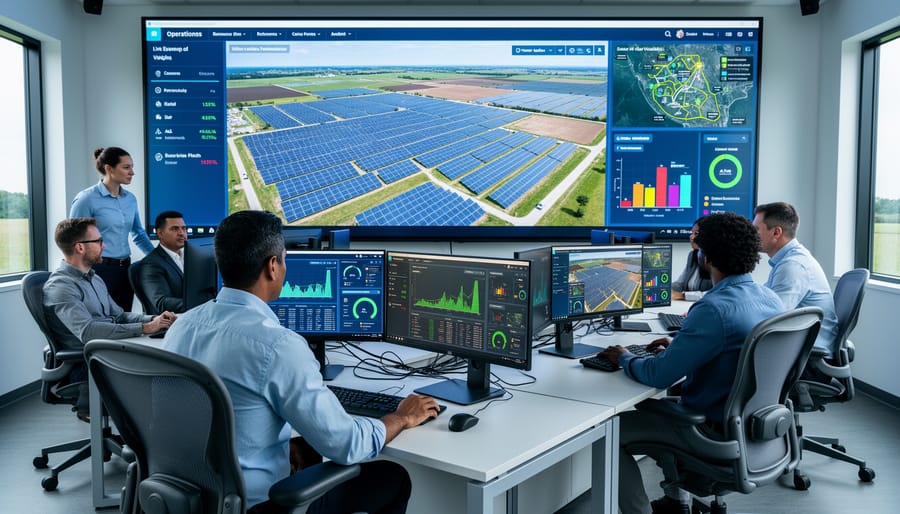
Enterprise asset management platforms typically arrive with strong industrial equipment hierarchies and work order workflows, but we found their solar-specific capabilities require extensive configuration. They track inverters as generic power equipment and handle performance data through custom fields rather than native solar metrics. Performance ratio calculations and degradation tracking demand integration with specialized monitoring platforms, since these systems weren’t built to understand DC/AC conversion efficiency or temperature-corrected yield analysis. The advantage lies in robust workflow automation and multi-asset class management, not out-of-the-box solar intelligence.
Specialized solar O&M software delivers native functionality we don’t see elsewhere. These platforms understand inverter strings, combiner boxes, and tracker controllers as solar components from day one. They calculate performance ratios using built-in irradiance correlation, track warranty expiration by module serial number, and flag degradation patterns against manufacturer curves without custom development. The module diagnostics features recognize hot spots, potential-induced degradation, and cell-level failures because the data models anticipate these solar-specific failure modes.
Hybrid CMMS solutions sit between these extremes. They manage work orders and spare parts effectively but treat solar assets like adapted versions of HVAC or electrical systems. We’ve seen operators configure custom asset types and bolt on monitoring integrations to approximate solar-specific tracking, achieving functional coverage through workarounds rather than purpose-built design. Custom systems vary entirely by implementation scope, from spreadsheet-based tracking to sophisticated platforms rivaling commercial software in solar intelligence.
Integration and Data Flow
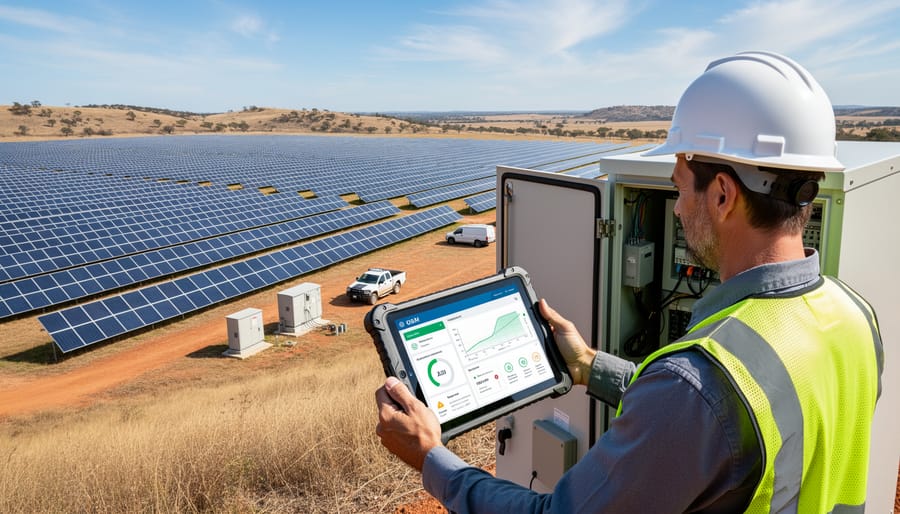
Integration architecture fundamentally determines how well an asset management system serves as the operational nerve center for your solar fleet. We’ve evaluated how each alternative handles the critical data exchanges that drive informed decision-making.
Enterprise platforms typically offer robust API frameworks and pre-built connectors for major SCADA and ERP systems, but solar-specific integrations often require custom development work. Their strength lies in bidirectional data flow with financial systems for depreciation tracking and capital planning, though inverter monitoring integration sometimes demands middleware layers.
Specialized solar software excels at native connections with monitoring platforms from SolarEdge, SMA, and similar manufacturers. These systems pull performance data seamlessly and correlate it with work orders without translation layers. However, connecting to corporate financial systems or legacy maintenance databases often requires additional integration services.
Hybrid CMMS solutions take a connector-based approach, relying on third-party integration platforms or custom API development. This provides flexibility but creates dependency on maintaining multiple connection points. We’ve seen implementation timelines extend significantly when integration complexity wasn’t mapped upfront.
Custom systems offer complete control over data architecture and integration protocols, but the burden of building and maintaining every connection falls entirely on internal teams. Each new monitoring platform or system upgrade becomes an internal development project rather than a vendor-supported update.
Cost Structure and Total Ownership
Enterprise platforms typically command the highest upfront investment, with licensing fees ranging from $50,000 to several hundred thousand dollars annually for mid-sized solar portfolios. We’ve observed these systems often price on a per-megawatt or per-asset basis, with implementation costs adding another 50-75% of first-year licensing fees when accounting for configuration, data migration, and training. Ongoing maintenance contracts usually run 15-20% of license costs annually.
Specialized solar O&M software generally operates on subscription models, with per-user or tiered pricing based on portfolio capacity. Monthly fees for 100-500 MW portfolios typically fall between $2,000 and $8,000, offering more predictable cash flow but potentially higher cumulative costs over extended periods. Implementation timelines are shorter, reducing professional services expenses, though integration with existing monitoring systems may require additional development.
Hybrid CMMS solutions present a middle path, with user-based licensing ($50-150 per user monthly) that scales with team size rather than asset count. These systems benefit operations managing diverse asset types beyond solar, spreading costs across multiple use cases. However, achieving solar-specific functionality comparable to purpose-built platforms often requires third-party integrations or custom development, creating hidden costs that emerge after initial deployment.
Custom in-house systems carry the highest development investment, $100,000 to $500,000 or more, but eliminate recurring license fees. Total ownership costs depend entirely on internal technical capacity and the complexity of maintaining performance improvements and feature additions over time.
Scalability and Multi-Site Management

Enterprise platforms handle multi-site operations most naturally because they’re architected for complexity from the ground up. We’ve seen these systems manage portfolios spanning hundreds of sites across multiple states without performance degradation. Their centralized data model aggregates asset information while maintaining site-level granularity, and they handle diverse technology mixes, crystalline, thin-film, trackers, fixed-tilt, within unified taxonomies. Role-based access controls scale cleanly as organizational hierarchies expand, and their reporting engines slice data by geography, technology type, or ownership structure without custom development.
Specialized solar software scales well within its domain but shows constraints when portfolios become extremely large or diverse. Most platforms handle 50-100 sites smoothly, but response times can lag beyond that threshold depending on monitoring data volume. Geographic distribution rarely poses issues since cloud architecture is standard, though some systems charge per-site licensing that makes growth expensive. These platforms excel at technology diversity within solar, they distinguish bifacial performance, optimizer-level faults, and string configurations naturally, but struggle if you add wind or battery storage requiring different operational models.
Hybrid CMMS solutions scale through configuration rather than native design, which creates mixed results. The underlying maintenance framework handles unlimited sites and assets, but solar-specific intelligence often requires site-by-site setup. We’ve found these systems work well for moderate growth, ten to fifty sites, where you can amortize configuration effort. Beyond that, maintaining consistency across custom workflows becomes labor-intensive.
Custom systems scale only as far as your development roadmap extends, requiring continuous investment as fleet complexity grows.
Implementation Timeline and Support Requirements
Getting an asset management system operational isn’t just about signing a contract, each alternative comes with distinct deployment realities and ongoing support demands that solar operators need to plan for.
Enterprise platforms typically require the longest implementation cycles. We’ve observed timelines stretching six to twelve months for full deployment across distributed fleets, with substantial internal resources dedicated to data migration, workflow configuration, and integration testing. These systems demand dedicated project management, IT involvement for infrastructure setup, and coordinated training programs that pull operational staff off-site. Vendor support tends to be formalized through tiered packages, with critical issues routed through ticketing systems rather than direct engineering access. Budget for ongoing consulting fees as your operational requirements evolve.
Specialized solar O&M software deploys considerably faster, often operational within weeks rather than months. Vendors typically handle most configuration, and the solar-native design means less customization wrestling. Training requirements are lighter because the interface assumes solar workflows from the start. Support is usually more responsive, with direct access to engineers who understand inverter communication protocols and performance ratio nuances rather than generic asset management concepts.
Hybrid CMMS solutions fall somewhere between these extremes. Deployment speed depends heavily on how much solar-specific customization you need and whether existing maintenance workflows transfer cleanly. Support quality varies widely by vendor, some treat solar as a niche add-on with limited expertise.
Custom systems create permanent internal support obligations. Plan for dedicated development resources, ongoing maintenance as monitoring platforms and inverter APIs evolve, and institutional knowledge risks when key personnel leave.
Matching Alternatives to Your Operation
When Enterprise Platforms Make Sense
Enterprise platforms deliver the strongest return when managing large-scale, geographically distributed solar portfolios where standardization and centralized oversight create measurable operational advantages. Organizations operating 500 MW or more across multiple states typically find that enterprise systems justify their higher licensing costs through consolidated reporting, unified maintenance protocols, and corporate-wide visibility.
We’ve observed these platforms proving most valuable for solar industry leaders with complex organizational hierarchies requiring role-based access controls, multi-entity financial reporting, and standardized workflows across regional teams. The ability to enforce consistent data structures and maintenance procedures across dozens of sites outweighs the implementation complexity when uniformity directly impacts performance benchmarking and portfolio-level decision making.
Enterprise platforms make strategic sense when your organization already runs ERP systems for financial operations and needs deep integration between asset performance data and corporate accounting. Organizations planning acquisitions or rapid portfolio expansion benefit from the architectural scalability that enterprise systems provide, particularly when onboarding newly acquired assets requires minimal customization to existing processes.
Who Benefits from Specialized Solar Software
Specialized solar O&M platforms deliver the clearest value for operators who live and breathe photovoltaics. We’ve watched mid-size developers with 100-500 MW portfolios hit the point where spreadsheets break down and generic CMMS tools demand constant workarounds, string-level tracking becomes manual, degradation analysis requires custom scripts, and warranty claims pile up in email threads. Purpose-built software solves these pain points natively because it speaks the language of inverters, module failure modes, and performance ratios without translation layers.
Growth-stage companies scaling from 5 to 50 sites benefit most. You need rapid deployment across new projects, standardized workflows that installers and O&M crews can adopt quickly, and dashboards that show real-time production anomalies without PhD-level configuration. Dedicated solar operators, those managing exclusively PV assets rather than mixed energy portfolios, extract full value from specialized features: automated underperformance alerts tied to irradiance data, integrated warranty tracking by manufacturer and vintage, and mobile interfaces designed around field technician realities.
The financial case strengthens when your team’s core competency is solar operations rather than software customization. You gain immediate functionality instead of spending months adapting a generalist platform to understand what a combiner box failure actually means for revenue.
The Case for Hybrid CMMS Approaches
Hybrid CMMS approaches deserve consideration when you’re managing solar assets alongside other facility infrastructure or already running a maintenance management system that handles broader operations. We’ve seen this path work particularly well for organizations that acquired solar portfolios through expansion rather than starting as pure-play solar operators, or for facilities teams responsible for both traditional infrastructure and on-site PV systems.
The core advantage lies in preserving institutional knowledge and existing workflows while adding solar-specific capability through strategic integrations. Rather than forcing maintenance crews to operate in separate systems for different asset types, hybrid approaches extend familiar CMMS platforms with solar monitoring connections, specialized work order templates, and performance analytics modules. This maintains operational continuity, your team keeps using known preventive maintenance schedules, inventory management, and vendor coordination tools while gaining solar-specific tracking for inverters, string monitoring, and degradation trends.
The financial equation often favors this route when you’ve already invested in enterprise CMMS infrastructure. Adding solar modules and integrations typically costs substantially less than procuring standalone solar O&M platforms, especially when your existing system handles work order management, parts tracking, and contractor coordination effectively. You’re buying targeted extensions, not replacing functional infrastructure.
Justifying Custom Development
Custom development warrants serious consideration when your operation confronts genuinely unique challenges that commercial platforms fundamentally can’t address, not when you’re simply uncomfortable with configuration. We’ve seen successful custom builds emerge from three core drivers: regulatory compliance demands specific to regional or international markets that off-the-shelf systems don’t accommodate, proprietary operational methodologies that deliver measurable competitive advantage, and complex integration requirements with legacy infrastructure that pre-date modern API standards.
The financial justification becomes clearer when you calculate the recurring cost of workarounds across a commercial platform versus the upfront investment in purpose-built functionality. Organizations managing experimental technology deployments, bifacial tracker configurations, agrivoltaic systems, or hybrid storage integration, often find that building custom asset tracking delivers faster innovation cycles than waiting for vendor roadmaps to catch up.
Custom systems make strategic sense for developers who’ve standardized on specific technology stacks across their broader enterprise infrastructure and need deep data integration with financial models, risk management platforms, and investor reporting systems. The trade-off isn’t just financial: you’re committing to maintaining internal expertise and managing technical debt as standards evolve, which demands dedicated development resources and disciplined version control practices.
What Each Option Is
Solar operators evaluating asset management systems encounter four distinct paths, each with different architectural philosophies and operational implications.
Integrated enterprise asset management platforms are comprehensive systems originally designed for utilities and large infrastructure operators. These platforms, such as IBM Maximo, SAP EAM, and Infor EAM, treat solar assets as components within broader enterprise resource planning ecosystems. They offer deep functionality across procurement, inventory, workforce management, and financial integration, but require configuration to accommodate solar-specific workflows like performance ratio tracking and module-level diagnostics.
Specialized solar O&M software comprises purpose-built platforms developed exclusively for photovoltaic operations. Solutions like AlsoEnergy’s PowerTrack, Raptor Maps, and SCADA International focus natively on inverter monitoring, string-level fault detection, warranty claim management, and PV-specific work order templates. These systems understand solar terminology and regulatory requirements without extensive customization.
Hybrid CMMS solutions represent middle-ground approaches where general computerized maintenance management systems, such as UpKeep, Fiix, or MaintiMaint, integrate with existing solar monitoring platforms. Organizations configure these systems for solar use while maintaining flexibility for other facility types or equipment categories.
In-house custom systems are proprietary platforms built internally or through contracted developers, designed around unique operational requirements, legacy infrastructure, or competitive differentiation strategies that commercial products cannot address.
Dimension-by-Dimension Comparison
When evaluating asset management alternatives, solar operators face trade-offs across five critical dimensions that shape day-to-day efficiency and long-term viability.
Functional depth varies dramatically. Enterprise platforms offer comprehensive asset lifecycle tracking but often lack solar-specific features like string-level diagnostics or performance ratio calculations without expensive customization. Specialized solar software delivers native inverter monitoring and degradation tracking out-of-box, while CMMS solutions require configuration to handle PV-specific workflows. Custom systems can match exact operational needs but demand ongoing development resources.
Integration capability determines data flow quality. Enterprise systems typically provide robust APIs but may struggle with niche monitoring platforms common among regional installers. Specialized solar platforms connect readily to SCADA and inverter manufacturers but often have limited ERP integration. Hybrid CMMS options balance flexibility with complexity, while custom builds offer complete control at the cost of maintaining every integration.
Scalability reveals itself during fleet expansion. Enterprise platforms handle multi-site complexity well but can become cost-prohibitive as MW capacity grows. Purpose-built solar software scales efficiently within its domain but may falter when managing mixed asset types. CMMS solutions offer flexible scaling, though performance degrades with highly distributed fleets. Custom systems scale only as fast as your development team can iterate.
Who Should Choose Which
Choose integrated enterprise platforms if you operate 500+ MW across multiple states, need unified financial and operational reporting, and already rely on enterprise systems for other business functions. The upfront investment and complexity pay off when standardization and cross-functional visibility drive strategic decisions at the portfolio level.
Specialized solar O&M software fits operators managing 50-500 MW of pure solar assets who need deep PV-specific functionality without enterprise overhead. We’ve found this path works best for growth-stage developers and dedicated solar asset managers who prioritize rapid deployment and solar-native workflows over broad enterprise integration.
Select hybrid CMMS solutions when you manage mixed renewable portfolios, solar plus storage, wind, or conventional generation, and need maintenance discipline across asset types. This approach makes sense if you have existing CMMS expertise and prefer extending proven systems rather than adopting new platforms.
Custom development justifies itself only if your operational model creates competitive advantage through proprietary processes, you have in-house technical talent to maintain systems long-term, and commercial alternatives force compromises that undermine your strategy. Most operators overestimate this need.
Pros and Cons
Pros
- Multiple alternatives allow you to match system capabilities precisely to your fleet’s operational complexity and budget constraints.
- Specialized solar platforms deliver native performance monitoring and degradation tracking without extensive customization.
- Hybrid CMMS solutions let you leverage existing maintenance infrastructure while adding solar-specific extensions.
- Custom development provides complete control over data flows and enables competitive differentiation through proprietary workflows.
Cons
- Enterprise platforms often require significant upfront investment and implementation resources that smaller operators struggle to justify.
- Purpose-built solar software may lack the cross-portfolio functionality needed if you manage mixed energy assets.
- CMMS adaptations typically demand ongoing integration maintenance as monitoring platforms and inverter protocols evolve.
- Custom systems create long-term technical debt and vendor lock-in to your development partner or internal team.
The strategic choice hinges on balancing immediate functionality against long-term flexibility. We’ve found that operators who evaluate alternatives through the lens of their actual daily workflows, rather than aspirational feature lists, make more durable decisions. The risk isn’t choosing the “wrong” category of solution; it’s selecting a system whose cost structure, integration demands, or support requirements misalign with your organizational capacity to implement and maintain it effectively. The dimension-specific comparisons outlined earlier give you the framework to assess that alignment systematically rather than reacting to vendor claims or industry hype about what “leading” solar operators supposedly use.
Common Questions About Asset Management Alternatives
How difficult is migrating from one asset management system to another?
Migration complexity depends primarily on data structure compatibility and integration dependencies. Enterprise platforms with standardized APIs typically export cleaner datasets than legacy custom systems, but expect 3-6 months for phased migration of historical records, work orders, and asset hierarchies across a multi-site portfolio.
How do I avoid vendor lock-in when selecting an asset management alternative?
Prioritize platforms with open APIs, standard data export formats, and documented integration protocols. During vendor evaluation, request sample data exports and assess portability of custom configurations, workflows, and historical records, proprietary data schemas create the strongest lock-in.
What’s the biggest integration challenge when implementing a new asset management system?
Bi-directional data flow between monitoring platforms and maintenance systems creates the most friction. SCADA systems often use proprietary protocols that require middleware or custom connectors, and real-time alarm routing to work order generation fails without reliable event mapping between platforms.
Should I run a pilot program before committing to an asset management alternative?
Yes, pilot one or two representative sites for at least a full quarterly cycle to surface integration issues, workflow gaps, and user adoption challenges. Test the system under actual field conditions including emergency response scenarios and reporting cycles before rolling out across your entire fleet.
When evaluating vendor proposals, focus your questions on post-implementation realities rather than feature checklists. Ask vendors to demonstrate how their system handles edge cases specific to your operation: multi-technology sites with both fixed-tilt and tracker arrays, warranty claim workflows across different module manufacturers, or contractor coordination for geographically dispersed assets. Generic demos showcase ideal scenarios; your evaluation needs to expose gaps that emerge during routine chaos.
Structure your vendor selection around a documented decision matrix weighted to your operational priorities. If module-level diagnostics matter more than financial reporting depth, weight functional capabilities accordingly rather than treating all dimensions equally. We’ve observed organizations regret purchases where the selection committee optimized for enterprise credibility rather than solar-specific functionality that operations staff use daily.
Build contingency into your implementation timeline for the inevitable integration surprises. Even when vendors claim turnkey deployment, connecting to legacy monitoring systems or customizing approval workflows consistently takes longer than projected. Plan for iterative refinement rather than a single go-live date, and maintain parallel systems during transition periods to avoid operational disruption when the new platform inevitably requires adjustment.
Choosing the right asset management alternative isn’t about finding a universal winner, it’s about matching system architecture to your operational reality. We’ve seen solar operators succeed with enterprise platforms, specialized software, hybrid CMMS configurations, and custom builds. The common thread isn’t the technology choice itself, but the clarity of the decision framework that led to it.
Start your evaluation by ranking the dimensions that matter most to your operation. If native solar functionality and rapid deployment drive your priorities, specialized O&M platforms typically deliver faster time-to-value than adapted enterprise systems. If you’re managing diverse asset classes across multiple industries, the integration capabilities of enterprise EAM often justify their higher complexity. For operations with established maintenance workflows, extending existing CMMS infrastructure usually costs less than replacing it wholesale.
Structure vendor evaluations around your ranked dimensions rather than feature checklists. Request demonstrations using your actual asset data and workflows, generic demos hide integration friction and configuration overhead. Ask vendors to map their solution against your specific pain points: inverter failure prediction, warranty claim automation, multi-site work order coordination, whatever keeps your team from operating efficiently today.
Pilot programs prove value before full commitment. Select a representative site or asset subset, define success metrics tied to your priority dimensions, and run the pilot long enough to encounter typical operational scenarios, not just the easy ones. Track both quantitative improvements (reduced downtime, faster work order completion) and qualitative factors (team adoption resistance, support responsiveness).
The asset management alternative you choose in 2026 will shape your operational capabilities for years. Ground that decision in your strategic direction and measured operational needs, not vendor promises or industry buzzwords.